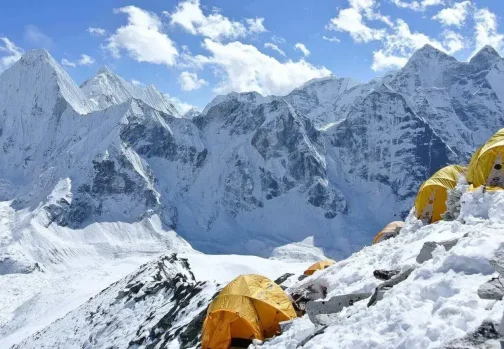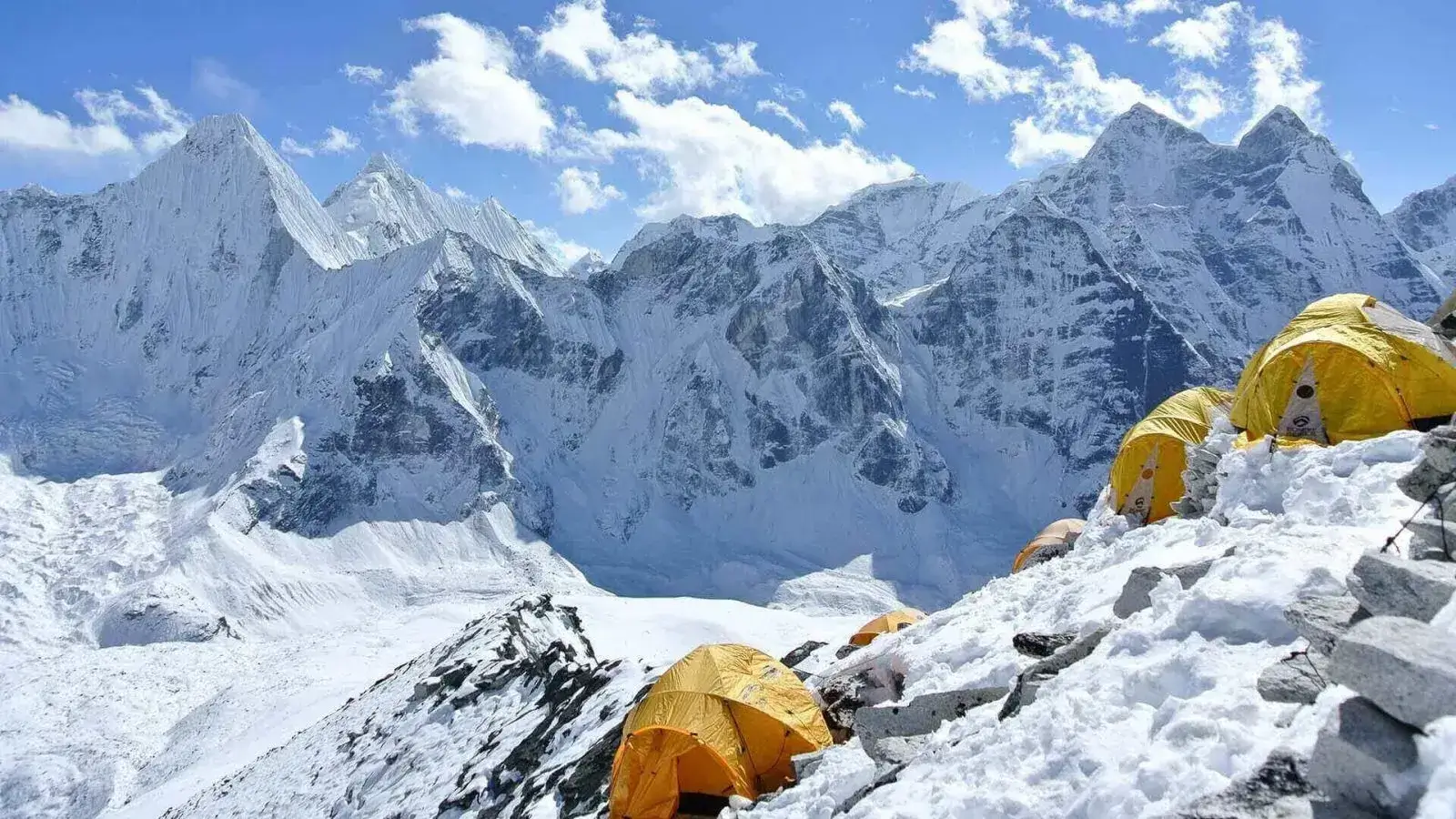
Climbing Ama Dablam is a coveted challenge for mountaineers, known for its striking beauty and technical demands. Standing at 6,812 meters (22,349 feet), it’s one of the most sought-after climbs in the Himalayas. Here’s a step-by-step guide to help you understand the Ama Dablam summit route, designed for both new and seasoned climbers seeking the ultimate Himalayan adventure.
Altitude: 4,600 meters (15,091 feet)
Base Camp is where climbers begin their expedition. The camp, located in the heart of the Khumbu region, offers panoramic views of nearby peaks. This stage is dedicated to acclimatization, as climbers adjust to the high altitude. The base camp is also where the expedition team prepares, organizes gear, and holds initial training sessions for technical climbing skills.
While at Base Camp, climbers engage in essential training, including rock climbing techniques and using fixed ropes. The terrain at Base Camp offers an excellent opportunity to practice skills that will be used higher up the mountain. It’s also a good chance for climbers to check their gear, ensuring everything is in working order.
Altitude: 5,700 meters (18,700 feet)
Distance: 4-6 hours
The first major push takes climbers from Base Camp to Camp 1, which involves a mix of rocky terrain and snow. Climbers will navigate fixed ropes and loose rock, so attention to safety is critical. The route requires careful navigation, as the conditions are often challenging and steep.
Altitude: 6,400 meters (21,000 feet)
Distance: 6-8 hours
From Camp 1, climbers head to Camp 2. This section involves more technical climbing with steeper rock and snow conditions. Fixed ropes assist in navigating the exposed ridgelines. Climbers need to stay focused as they approach higher altitudes where acclimatization becomes more important.
After reaching Camp 2, climbers descend back to Base Camp for rest. This period allows for further acclimatization and mental preparation for the summit push. Proper rest and recovery are vital, as this will be the last chance to recuperate before the final ascent.
The climbers make their way back to Camp 1 for the final preparations. This leg of the climb gives climbers another opportunity to familiarize themselves with the route, gain confidence, and ensure everything is set for the final push.
Description: After a second ascent to Camp 2, climbers make their way toward the summit. This section reinforces endurance, as the climb gets progressively steeper. Technical rock and ice sections require climbers to use all their skills, and with the summit so close, mental toughness is as important as physical strength.
Camp 1 to Camp 2, summit push, technical climbing, mental toughness, endurance building.
Altitude: 6,812 meters (22,349 feet) – Summit
Distance: 6-8 hours
The final ascent to the summit is the most challenging, involving steep snow, ice slopes, and mixed rock climbing. Climbers face the full range of technical climbing challenges, from icy terrain to rock walls. This is where the climbers’ training, preparation, and mental resilience are put to the test.
After summiting, climbers descend to Camp 2. This part of the journey can be as demanding as the ascent, as fatigue sets in. Careful attention to the descent route is crucial for ensuring a safe return.
Distance: 6-8 hours
The final leg of the climb is the descent from Camp 2 back to Base Camp. After a challenging ascent and summit, climbers can take solace in completing the journey and enjoy the camaraderie of the team at Base Camp.
Summiting Ama Dablam is a remarkable achievement, combining technical climbing with high-altitude perseverance. With the right preparation, the summit is within reach, but climbers must be prepared for a physically demanding and mentally challenging experience. By following the step-by-step route outlined above, you’ll be ready for one of the most memorable climbs in the world.
Introducing our highly anticipated Ama Dablam Climbing Expeditions for 2024 & 2025! Are you a climber who dreams of conquering the iconic Ama Dablam but is concerned about its technical difficulty, unpredictable weather, or the physical demands of the ascent? At Protrek Adventure, we understand these challenges and are here to provide expertly guided ascents, ensuring a high success rate and a truly unforgettable experience. Our seasoned guides, meticulous planning, and unwavering support will help you overcome every obstacle, from altitude sickness to gear requirements, making your summit dreams a reality.
Ama Dablam 2025 Spring Climbing Dates
Plan Ahead: Join Our Less Crowded Spring 2025 Expedition
Ama Dablam 2025 Autumn Climbing Dates
Get Ready: Experience the Thrill of Autumn 2025
For more information on our Ama Dablam Expedition or any of our other exciting climbing experiences, feel free to reach out to our team. You can contact us via call or WhatsApp at +9779860915432 or send us an email at info@protrekadventure.com